

Transactional Ministry or Abiding Relationship?
Christ, the Temple System, and the Call to a Pure Church
Choosing Whom We Will Serve
(C)2025 Taveau D’Arcy All copyrights reserved
Psalm 112 “Blessed is the man who fears the Lord, who delights greatly in His commandments, His seed shall be mighty upon earth the GENERATION OF THE UPRIGHT SHALL BE BLESSED. “
Wealth and riches are in this his house and his righteousness endures forever”
And they all said, “AMEN!”—and put on their liveliest praise music.
However, what begins with sincerity can, over time, turn obsessive, out of proportion, and even silly. Scripture itself warns us of this drift. Paul writes in 2 Timothy 4 that “Demas has forsaken me, having loved this present world.”
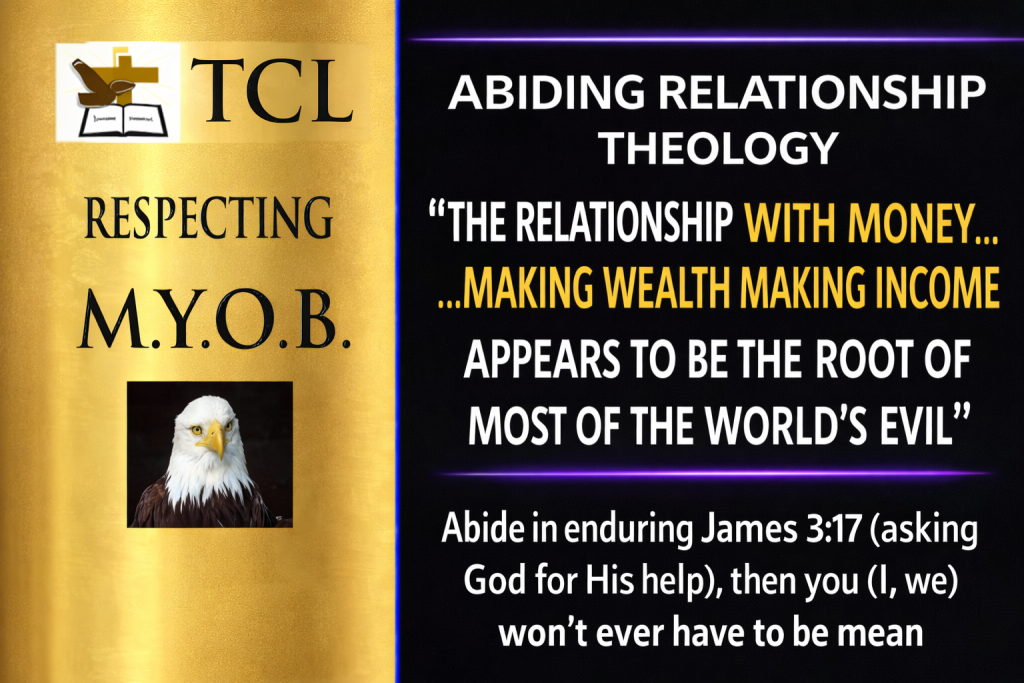
Money is a major relationship. And it has a power..
It accuses….it attracts..it’s a Leviathan in disquise (read Job 41) and we can’t do live without..but the day is nigh, when we each will given the “choice” whom to please…the world system or trust the mosty High God and will be perish or not for “HIM”
The righteous person’s test is “pressure on inside, outside, human relationships) there is an articles on this site THE 10 BIBLE RELATIONSHIPS from TCL that teaches then
And where there is”enough” it is all peace and calm and Sweet Baby Jesus love…
Yet , when there is not enough—and it accuses, it explodes, it harms…
Also, when there is too much and the owner becomes self indulgent, maybe proud high and mighty or more.
For the power, strength (stronghold )about the “relationship with money” It has destroyed, wounded, even murdered, unalived, ego enslaved, also bought and sold and many sacrificed “earned” and also torn apart many hearts, persons, families, friendships, and ministry fellowships..so this is precisely why we are here: to discuss it, to train rightly, and to model healthier priorities.
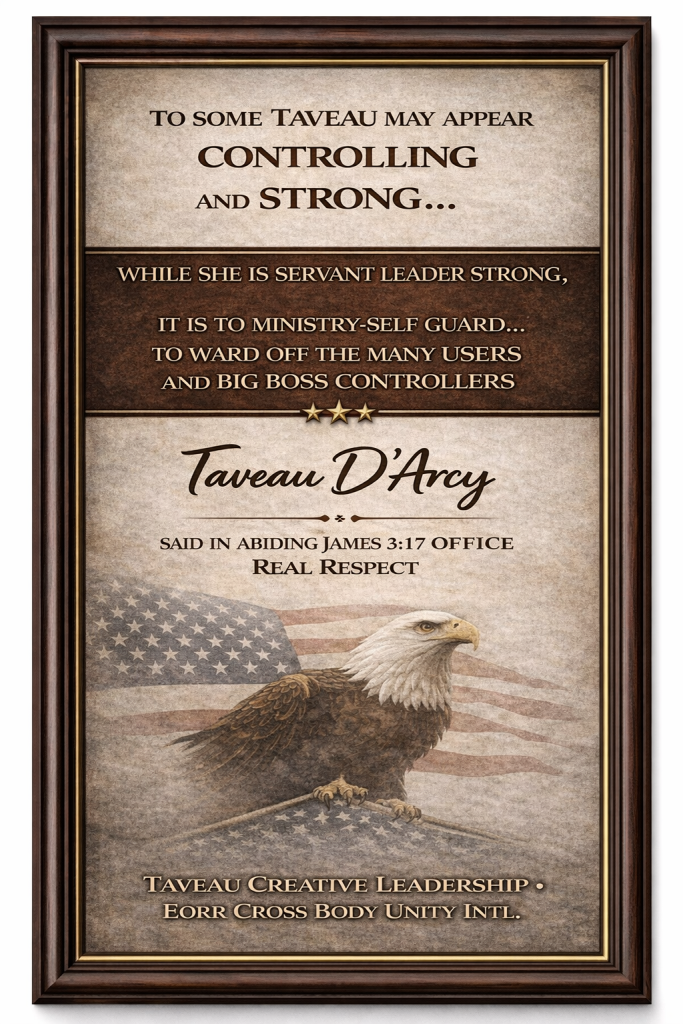
FOR THOSE THAT KNOW THIS APOSTOLIC MINISTER: Let me be clear.
This is, we are not attacking or debunking all faith ministries—many of which have sown generously and sacrificially, helping real people remain alive, healed, and sustained. Yet it is also true that some lost their way. Some ran with the message beyond its original intent. Others were drawn into the culture of society, television, celebrity Christianity, and entertainment—into a Demas-like reality, where money became more central than relationship with the Lord.
This is why I am beginning to write, speak, and author on inner wealth, prosperity doctrines, biblical organic peace, and godly contentment (1 Timothy 6:6), while still acknowledging the practical need for income—to live safely, to give generously, and to plan wisely. Scripture also teaches that “a good person leaves an inheritance to their children’s children”—a truth rarely emphasized during recent Christian movements focused on money.
No one is perfect—most certainly not this person.
This work is not, nor has it ever been, an attack on any worldwide-known or local Christian leader. I am addressing fruit, not people. I have personally experienced the consequences of certain ministry choices—what I call the Demas-pattern, a polished, leader-centered, slippery slope—and I believe it must be addressed without cursing, reviling, name-calling, or public shaming.
I intend to remain positive, candid, and grounded in 2 Timothy 3:16–17, allowing Scripture to reprove and correct—without calling out names, spotlighting individuals, or joining the current fad of public ministry takedowns.
I am not moved by crowds or appearances.
I am concerned for the Future Church—and for believers who are confused about what to do when they do not experience the spectacular, wonder-working side of faith that is often presented as normative.
I call this emphasis Abiding Faith.
I am not under, affiliated with, funded by, nor presently donating to any mega-ministry. Like many others, I am cautious—yet I care deeply for the pure-hearted founders and sincere followers who love Christ genuinely.
Within this Abiding Relationship Theology and Cross-Body Unity approach, we address doctrine and fruit, not accusations. We do not dishonor people. We respect and honor the faith-filled fathers and mothers of earlier Bible-believing, trustworthy ministries. We also affirm that giving—or not giving—is a matter of personal conviction led by the Holy Spirit.
We teach ministry perspectives as they were originally meant, before they were distorted, sensationalized, or attacked—by both society and fellow ministers. I am grateful God allowed me to encounter believers who were mighty in faith, free from racial or gender bias, non-psychic, joyful, and genuinely Spirit-filled—people who stayed positive and relational.
I will teach on faith, but not as a prosperity teacher.
The true balance is relationship with Christ over mammon, humility over image, and servant leadership shaped by Isaiah 53 Jesus, not merely a King Solomon success model.
As Paul writes in Philippians 2:12, each person must walk this out personally. Yet we are still called to serve, to give thanks, and to address real-world fruit at the grassroots level—where much has gone astray, though not all.
I speak as an elder with long experience, having lived alongside multiple streams of Christianity—mega-ministries, Word-of-Faith environments, psychic-style prophecy circles, Southern Baptist traditions, and healing evangelism. I still admire much of what God has done. Yet I refuse to belong to, submit under, or identify with any single Christian subculture.
This work is not about money itself.
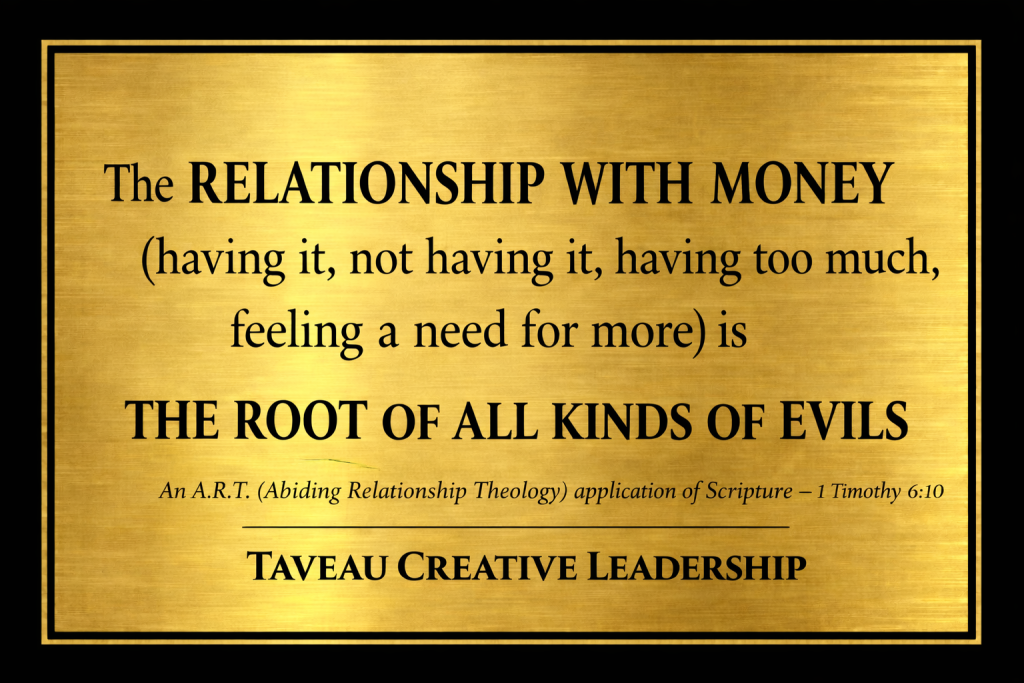
It is about the relationship with money—making it, lacking it, having too much of it, chasing it, or fearing it—and discerning when enough is enough.
Money may be called “the root of all evil,” but money alone is not. Psalm 127:1 reminds us that “Unless the Lord builds the house, they labor in vain who build it.” This speaks to the private heart, the conscience continually tried, sifted, and refined—weekly and over a lifetime.
Over time, we will address the pull of money—success, things, and the many definitions of prosperity. Every person carries an internal measurement of what true prosperity means, shaped by conscience, experience, and faith.
And in every generation, the Church faces a recurring temptation:
to exchange relationship for leverage,
obedience for outcome,
and love for transaction.
This temptation does not announce itself as rebellion.
It often wears the language of Scripture, success, zeal, and even faith.
Yet Scripture itself draws a clear distinction between true Christ-following and transactional religion.
This article seeks to paint a biblical portrait—using the King James Version—of Jesus Christ as He actually lived among people, and to contrast His relational posture with both the temple system of His day and the transactional ministry patterns of our own.
What Is Transactional Ministry?
Transactional ministry is not defined by money alone. It is defined by exchange logic:
I give in order to get.
I obey so that God will reward me.
I serve as long as the outcome benefits me or my group.
I relate to people based on usefulness, alignment, or return.
In transactional systems:
people become means, not neighbors
obedience becomes currency
authority becomes leverage
blessing becomes proof of worth
This mindset quietly shifts ministry from relationship with God to management of outcomes.
Scripture warns against this distortion plainly:
“Supposing that gain is godliness: from such withdraw thyself.”
— 1 Timothy 6:5 (KJV)
Jesus Christ and the Rejection of Transaction
Jesus Christ consistently refused transactional faith—both from individuals and institutions.
The Temple System Then
In Jesus’ time, the temple had become a place where:
access was regulated by status
sacrifice was monetized
authority protected itself
people were ranked by purity and usefulness
When Jesus confronted this system, He did not negotiate terms. He overturned it.
“My house shall be called the house of prayer; but ye have made it a den of thieves.”
— Matthew 21:13 (KJV)
This was not merely about money. It was about what the system had become: a place where God was mediated through transaction rather than relationship.
Christ’s Relational Posture: A.R.T. in Action
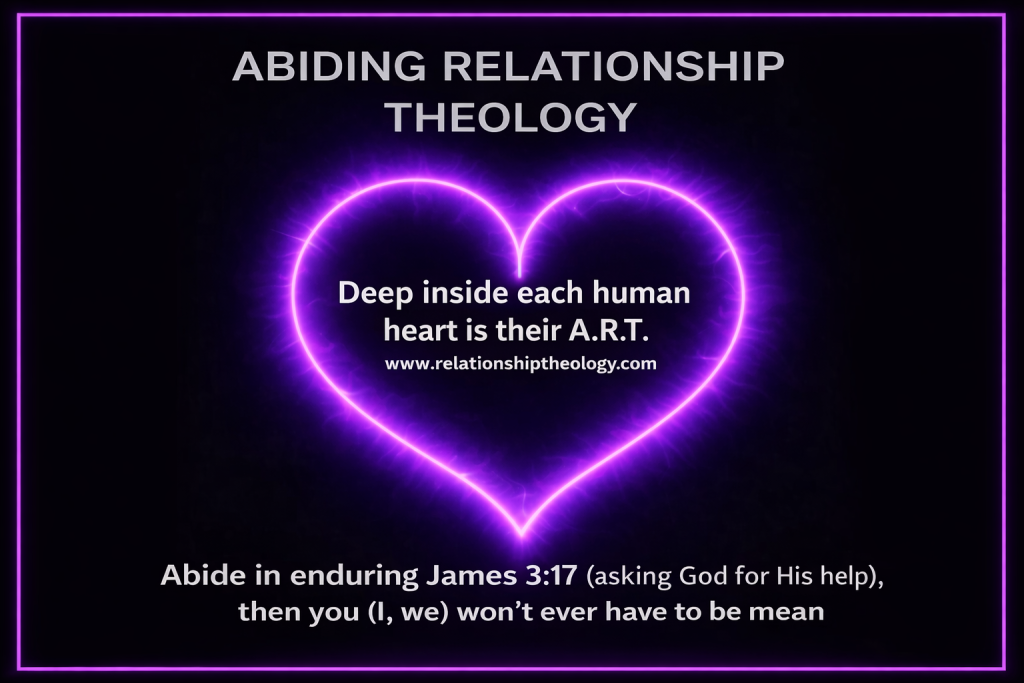
In contrast, Jesus modeled what may be called Abiding Relationship Theology (A.R.T.)—a way of living faith that flows from who God is, not what God can be extracted from.
Christ Related Before He Corrected
Jesus ate with sinners before instructing them.
“But Jesus said unto them, They that be whole need not a physician, but they that are sick.”
— Matthew 9:12 (KJV)
He related first. He did not reduce people to categories or reputations. He saw them as human beings made in God’s image.
Christ Refused Performance Faith
Jesus rejected religious display that sought recognition or reward.
“Take heed that ye do not your alms before men, to be seen of them: otherwise ye have no reward of your Father which is in heaven.”
— Matthew 6:1 (KJV)
In transactional religion, the appearance of righteousness replaces transformation. In Christ, righteousness flows quietly from abiding.
Christ Valued the Person Over the System
Jesus healed on the Sabbath—not to provoke, but to restore the priority of relationship over rule-keeping.
“The sabbath was made for man, and not man for the sabbath.”
— Mark 2:27 (KJV)
This statement dismantles every ministry system that sacrifices people to preserve structure.
Defining Ministry: Transactional vs. A.R.T.
Transactional Ministry Produces:
fear-based obedience
comparison and competition
suspicion and accusation
selective honor
burnout and disillusionment
Its fruit is measurable, but shallow.
A.R.T. Ministry Produces:
humility under pressure
patience in conflict
restoration rather than exposure
conscience-led obedience
genuine fellowship
Its fruit may be quieter—but it endures.
Scripture defines this fruit unmistakably:
“But the wisdom that is from above is first pure, then peaceable, gentle, and easy to be intreated, full of mercy and good fruits, without partiality, and without hypocrisy.”
— James 3:17 (KJV)
This is not optional fruit. It is the test of authenticity.
Fellowship: Transaction or Covenant?
True Christian fellowship is not networking, alignment, or brand loyalty. It is shared life in Christ.
“But if we walk in the light, as he is in the light, we have fellowship one with another…”
— 1 John 1:7 (KJV)
Transactional fellowship asks:
What do you bring?
Who are you under?
Do you benefit us?
Christ-centered fellowship asks:
Are you walking in the light?
Are you seeking truth?
Can we love one another without leverage?
The Modern Church and the Ancient Choice
The modern Church stands where the temple system once stood—facing the same decision.
Will we:
prioritize image or integrity?
protect systems or preserve souls?
reward performance or cultivate fruit?
Paul warned of our time explicitly:
“This know also, that in the last days perilous times shall come. For men shall be lovers of their own selves… having a form of godliness, but denying the power thereof.”
— 2 Timothy 3:1,5 (KJV)
The “power” denied is not charisma. It is transformative love.
A Call to a Pure Church
The pure Church is not perfect—but it is relationally faithful.
It:
corrects without cruelty
leads without domination
honors without favoritism
obeys without bargaining
It follows Christ not for what He gives, but for who He is.
“If ye love me, keep my commandments.”
— John 14:15 (KJV)
Not to earn love—but because love abides.
Closing Exhortation
Transactional ministry may build quickly, but it does not last. Christ-formed relationship may grow quietly, but it endures storms.
The Church does not need new formulas. It needs a return to abiding.
When relationship is restored, fruit follows.
When fruit abides, witness is credible.
When Christ is modeled under pressure, the Church becomes safe again.
That is the call.
That is the way.
NEWS upcoming ASAP Taveau’s A.R.T. Abiding Relationship Theology MEGA MINISTRY SERIES
SUPPORT: Sure. You donate (no tax write off) But also YOU can pray for all of THIS. And much Thanks!
© 2026 Taveau D’Arcy Creative Leadership. All rights reserved.
AI was used only for editorial assistance; all content reflects the author’s own theological convictions.