

THE MANY VOICES
1 Corinthians 14:10, where Paul talks about the variety of “voices” or “languages.”
Here’s how that verse appears in each translation:
1 Corinthians 14:10
KJV“There are, it may be, so many kinds of voices in the world, and none of them is without signification.”
ESV“There are doubtless many different languages in the world, and none is without meaning,”
NIV“Undoubtedly there are all sorts of languages in the world, yet none of them is without meaning.”

NOTE:
In context, Paul is discussing the use of speaking in tongues and emphasizes the importance of intelligibility in worship. He’s pointing out that all languages (or “voices”) have meaning — but if no one understands what’s being spoken, it’s not beneficial to others.
So the phrase “There are many voices in the world, Paul” is probably a paraphrase or a modern restatement of this verse.
Great question! To dig into the original languages of “many voices” as found in 1 Corinthians 14:10, we need to examine the Greek, because the New Testament — including Paul’s letters — was written in Koine Greek, not Hebrew or Aramaic.
1 Corinthians 14:10 (Greek)τοσαῦτα εἰ τύχοι γένη φωνῶν εἰσὶν ἐν κόσμῳ,
tosáuta ei túchōi géne phōnôn eisin en kósmō,
“There are, it may be, so many kinds of voices in the world…”
Key Greek Words:
-
γένη (génē) = kinds, types, categories
-
φωνῶν (phōnōn) = voices, sounds, languages (genitive plural of φωνή, phōnē)
So the phrase “many voices” would be something like:
πολλαὶ φωναί (pollai phōnai) — literally “many voices”
or
πολλὰ γένη φωνῶν (polla génē phōnōn) — “many kinds of voices”
Hebrew & Aramaic Equivalent:
While Paul didn’t write this in Hebrew or Aramaic, here’s how the idea of “many voices” might be expressed in those languages:
Hebrew (Biblical/Classical)
-
קוֹלוֹת רַבִּים (qolot rabbim)
-
קוֹלוֹת (qolot) = voices (plural of qol)
-
רַבִּים (rabbim) = many
-
Aramaic (Biblical/Syriac style)
-
קָלִין סַגִיאִין (qalin saggin)
-
קָלִין (qalin) = voices
-
סַגִיאִין (saggiin) = many (common Aramaic word for “many/much”)
-
Summary:
| Language | Phrase for “Many Voices” |
|---|---|
| Greek (NT) | πολλὰ γένη φωνῶν |
| Hebrew | קוֹלוֹת רַבִּים (qolot rabbim) |
| Aramaic | קָלִין סַגִיאִין (qalin saggin) |
SISTER TD
I want to train Christians on discerning ,perceiving, paying attention to, as in “detecting” the ‘inward witness of the Holy Spirit” which is the John 16:13 “spirit of truth” which bears fruit of James 3:17 pure peace and 2 Timothy 1:7 (God’s power and peace, no fear).
I submit that in the realm of “proper discernment of the Voice of the Lord (also the “voice of the Good Shepherd which gives life to His sheep”) which this same hallmark of John 16:13 “when the spirit of truth (God’s Holy Spirit) has come, He will guide you into all truth. He will not talk about Himself, He will talk about things to come”
Also James 3:17 “The from above” which is marked by God’s “pure, peaceable, easily entreated ,(respectful) full of mercy and good fruits, without partiality and without hypocrisy”
..I want to submit that ‘Paul says ‘there are many voices in this world” and I state” this means inside and outside may voices,from recurring impressions, visions, ideas, teaching, fear, night mares to outside voices Bible teaching, video, advice prophetic word media, gossip, voice mails, emails and more (expound and train and see if that applies rightly to may own training
Training Believers to Discern the Inward Witness of the Holy Spirit
Foundational Scriptures
John 16:13 (KJV)“Howbeit when he, the Spirit of truth, is come, he will guide you into all truth: for he shall not speak of himself; but whatsoever he shall hear, that shall he speak: and he will shew you things to come.”
James 3:17 (KJV)“But the wisdom that is from above is first pure, then peaceable, gentle, and easy to be intreated, full of mercy and good fruits, without partiality, and without hypocrisy.”
2 Timothy 1:7 (KJV)“For God hath not given us the spirit of fear; but of power, and of love, and of a sound mind.”
1 Corinthians 14:10 (KJV) “There are, it may be, so many kinds of voices in the world, and none of them is without signification.”
John 10:27 (KJV)“My sheep hear my voice, and I know them, and they follow me.”
Discerning the Voice of the Holy Spirit:
Training for Believers
I submit that one of the greatest needs in the Church today is proper, accurate also clear, discernment of the voice of the Lord.
We are not left to stumble in the dark. Jesus promised that the Spirit of truth would guide us into all truth — and not just general or doctrinal truth, but specific, day-to-day direction, conviction, warning, and affirmation.
This is what Paul referred to in Romans 8:16 as “the Spirit Himself beareth witness with our spirit.” This inward witness is not loud, but it is consistent, peaceable, and wise (James 3:17). It is the living echo of the Shepherd’s voice inside the believer.
But here’s the challenge — “there are many voices in the world” (1 Cor. 14:10). And I submit that this includes both external and internal voices, and they all have “signification” — they carry some kind of weight, influence, or meaning.

What Are These “Many Voices”?
1. External Voices:
-
Bible teaching (good or poor)
-
Prophetic words
-
Advice from mentors, friends, or leaders
-
Social media, news, YouTube, podcasts
-
Books, blogs, and sermons
-
Music, movies, entertainment
-
Emails, voice mails, gossip
2. Internal Voices:
-
Your own thoughts and reasoning
-
Recurring impressions or ideas
-
Emotions — fear, anxiety, excitement
-
Dreams, visions, imaginations
-
Wounds or trauma speaking from your past
-
Nightmares, spiritual attacks
-
The whisper of the enemy (accusation, condemnation)
Training the Spirit to Discern:
It’s critical to train the human spirit to recognize the peaceful, consistent voice of the Shepherd, as distinct from the voices of the flesh, the enemy, or the world. Here’s how:
ONE: Test by Peace (James 3:17)
-
The wisdom from above is first pure, then peaceable.
-
If something is pressuring, confusing, or feels manipulative — it’s not from the Spirit.
-
Does the “leading” you’re receiving line up with purity, gentleness, mercy, and sincerity?
TWO: Test by Sound Mind (2 Timothy 1:7)
-
God does not lead through fear, depression, oppression, anxious worry, premonitions which have ‘fear anxious” fruit.
-
The Spirit’s guidance empowers with clarity, balance, love, and mental/emotional order. (not powerless)
THREE: Test by Scripture (John 16:13)
-
The Holy Spirit only speaks what He hears from the Father and Son.
-
He will never contradict Scripture or produce confusion about truth.
-
The Spirit will glorify Jesus — not self, ambition, or confusion.
FOUR: Test by the Witness (Romans 8:16)
-
The inward witness is often not words, but a inner perceived “knowing.” (yet when /if it is God, it must be calm,peaceful, even if it is sober)
-
It’s like a green light in your spirit — peace, rest, joy — or a red flag of unease.
-
It often comes quietly and must be discerned in prayer.

Practical Discernment Exercise (for believers):
-
Be Still Before God. Turn off the noise. Get alone with Him.
-
Ask Specific Questions. “Lord, is this from You?” “Do You want me to move forward?”
-
Journal What You Sense. Look for peace vs. pressure, clarity vs. confusion.
-
Compare with Scripture. Use verses like James 3:17, Romans 8:16, 2 Tim 1:7.
-
Ask God for Confirmation. He is not offended when His children seek clarity. He wants you to know His voice.
Caution: Not Every “Voice” Is God
Even good-sounding advice or religious talk can come from the wrong source. Remember Peter said, “Thou art the Christ,” one moment and then “Be it far from thee, Lord,” the next — and Jesus had to say, “Get thee behind me, Satan.” (Matthew 16:16–23)
Conclusion: Training for Accuracy
We are sheep of a Good Shepherd, and He does speak to us (John 10:27). But we must learn to tell His voice apart from the many other voices — both within and without.
Paul’s reminder in 1 Corinthians 14:10 that there are “many voices” is not just about human language. It serves as a metaphor for the cacophony of influences we encounter daily.
++ Discernment is not suspicion.
++ Discernment is not fear.
++ Discernment is tuning your ear to the consistent peace and purity of the Holy Spirit’s inward witness.

SISTER TD SAYS
And about the ‘many voices: ‘Actually, it comes from knowing following Christ, in an abiding daily relationship coupled with knowledge of the Bible (His Holy Scripture Word) (apart from the Old Timey fault finding accusing Levitical law .)
And about “Prophecy” (a prophetic word from the Lord which would “edify , comfort and strengthen” ( encourage) not give hopelessness, fear, word curses and death wishes,
The Safety in All of This is 1. Knowing the Bible, 2. Knowing and following Christ in a daily relationship, 3. Getting teaching or advice when you feel it is needed
FIRST LOVE, PRIME RELATIONSHIP ROOT:
All of this comes about slowly as one is cultivating a relationship with Christ that’s rooted in abiding daily communion, where the believer learns to distinguish His voice not from the accusation or condemnation of the law, but from the life-giving encouragement of the Spirit. Prophecy, in the New Testament context, is meant to build up, to strengthen, and to encourage (1 Corinthians 14:3), not to bind with fear, guilt, or false doom.
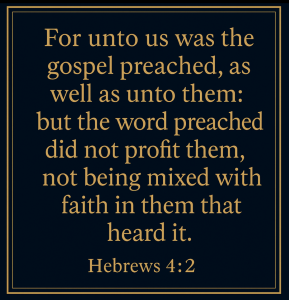
Let’s focus on these crucial concepts:
Knowing Christ: An Abiding Relationship and the Word
1) It’s essential that Christians understand that true discernment of God’s voice comes from a relationship — not just knowledge of the Bible, but an intimate, daily walk with Christ. This relationship helps the believer know His voice intimately, as John 10:27 states:
“My sheep hear my voice, and I know them, and they follow me.” (John 10:27 KJV)
In this abiding relationship, we learn to recognize the gentleness and peace that accompanies His leading.
Key Principles:
-
Abiding in Christ (John 15:4–5): This is a daily, ongoing relationship. Abiding means spending time with Him, meditating on His Word, listening for His voice, and living in obedience to what He says.
-
Knowing the Scriptures: The Bible is not just a book of moral commands or doctrinal knowledge — it is the revelation of God’s nature and will. The more we know His Word, the clearer His voice becomes. Without the foundation of Scripture, it’s easy to get confused or even led astray.
-
Apart from the law: The voice of Christ is never condemning or harsh. It doesn’t sound like a set of impossible rules or fault-finding. It’s not about “performance” or judgment. His words are life-giving (John 6:63).
-
Romans 8:1 says, “There is therefore now no condemnation to them which are in Christ Jesus, who walk not after the flesh, but after the Spirit.”
This verse is vital when it comes to discerning God’s voice — the voice of condemnation is never from God, and if it brings guilt, fear, or shame, it’s not Him.
That’s the enemy or your own flesh.

Prophecy: Edifying, Strengthening, Encouraging
In the New Testament, prophecy has a clear purpose:
1 Corinthians 14:3 (KJV):
“But he that prophesieth speaketh unto men to edification, and exhortation, and comfort.”
The primary function of prophecy is to build up, not to accuse, boast, put on a spectacle or tear down.
It is life-giving and uplifting, bringing strength to the believer, not subjugation or fear. The Holy Spirit works through prophecy to encourage, edify (build up), and comfort God’s people.
Key Distinctions:
-
Prophecy is NOT about death wishes or judgment.
Prophecy in the New Testament never brings condemnation but calls people to hope, life, and restoration. The Spirit’s voice through prophecy always points to Jesus — His grace, love, and peace. -
Test Prophetic Words (1 Thessalonians 5:20–21):
The New Testament encourages us to test prophecy to see if it aligns with Scripture and the nature of God. Prophecies should strengthen, encourage, and build up. If it feels like manipulation or oppression, it should be questioned. -
1 Thessalonians 5:20–21 (KJV):
“Despise not prophesyings. Prove all things; hold fast that which is good.” -
Subjection to Every Word of the Prophet? No.
There is no obligation in Scripture for believers to submit to every single word a prophet says. -
Jesus is our ultimate authority, and we are only to submit to prophetic words that align with His Word and His Spirit.
Key Expositions and Practical Application
-
Abiding Daily in Christ:
-
Know Him: This takes time — the more you are in communion with Christ, the easier it becomes to recognize His voice.
-
Bible Knowledge: Immerse yourself in the Word daily. It is through this foundation that we can recognize the truthful, peace-filled voice of the Spirit.
-
Live in Freedom: The Holy Spirit never leads in a way that burdens, condemns, or makes you feel less than. His voice brings freedom.
-
-
The Role of Prophecy in the Body of Christ:
-
Strengthening the Church: Prophecy is meant to build up the Body. When receiving a prophetic word, ask: Does it encourage me to walk more faithfully with Jesus? Does it align with Scripture?
-
Edification, Not Oppression: A true prophetic word strengthens, like a friend offering support during a hard time — it doesn’t leave you in fear or in the dark. If it feels oppressive or controlling, it’s not from the Spirit.
-
Be Berean: Just like the Bereans tested Paul’s words (Acts 17:11), we should always compare prophetic words with Scripture and the Holy Spirit’s inward witness.
-
-
Don’t Submit to Fearful Prophecies:
-
A true prophetic word does not leave you with a sense of impending doom, fear, or anxiety. Remember 2 Timothy 1:7 — God has not given us a spirit of fear, but of power, love, and a sound mind.
-
-
Discernment:
-
Cultivate discernment by testing every spirit (1 John 4:1). Ask, “Is this leading me to greater love for Jesus and others? Does it bring peace, or does it stir up confusion and fear?”

-
Conclusion: Prophecy & Relationship with Christ
In summary, knowing the voice of Christ and discerning true prophecy is about relationship, not religion.
A life abiding in Jesus means you learn to hear His voice more clearly, and prophecy becomes something that strengthens and encourages rather than burdens or subjugates. We are not under the law anymore, where we hear a condemning voice; we are in Christ, and His voice brings life and peace (John 10:10).
Jesus is the Good Shepherd, and His sheep know His voice (John 10:27). The Holy Spirit, the Spirit of truth, will guide us into all truth and help us discern between the many voices we hear — both internal and external.
Final Thought: “Discernment comes by reason of use”
The more you do it, the easier it should be to detect WHEN, IF it is the Holy Spirit (voice of the Good Shepherd) or not.
Point: As you grow in your relationship with Christ, learn to tune your ear to His voice. Abide in His Word, and you will recognize His guidance in the day-to-day. The more you grow, the more you will distinguish His gentle, peace-filled voice from the many voices in the world that seek to confuse or lead astray.
More later
TO SOW INTO THIS TEACHING MINISTRY
(C)2025 Taveau D’Arcy All copyrights reserved under international copyright laws, in conjunction with AI